


10 Steps in Publishing a Book — or What I've Been Doing Instead of Rewriting my book about the charge at Beersheba

Updated: Jun 20
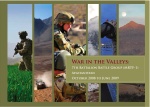
Why haven't I been working on my Beersheba manuscript for the past several months?
Well, I took on a freelance project, my second one under Ryter Publishing.
The project has been to publish a high-quality, photographic coffee table book for a Defence client, titled — War in the Valleys : 7th Battalion Battle Group (MRTF–1), Afghanistan, October 2008 to June 2009.
I have prioritised this freelance project over my Beersheba book, thankfully with the blessing of my publisher Andrew Kelly of Red Dog Books (!).
I thought some of you might interested in how a book develops, so I wanted to share what it’s taken to get this book to print.
My main role has been as the project manager, which was being the conduit between the designer, printer and client. I was also the editor.
Stat Check
Physical specs — A4 (landscape); hardback (paper laminated case); 140 pages; four-colour
Word length — 44 articles, ranging in length from 120 to 4,500 words; and ranging in style, from informal, light-hearted tone to formal Defence writing — Total manuscript length: 45,000 words; that’s about the same length as my Beersheba book.
Photos — Some 1,260 photos were whittled down to 106 photos, and the page number for each photo was stipulated. The client put in a huge effort to get this done; over the Christmas break no less!
The Process
Step One — Set-up the project
My tasks — Evaluate project and source suppliers. Receive brief, files and source a designer and printer
Designer — Extracted the manuscript from the initial design that was prepared
Step Two — Manuscript Development (Structural Edit)
My tasks — Conduct initial structural edit; Establish style guide; Propose/develop the glossary and acronyms list, organisational chart and new book order
Designer — Prepared next text design
Client — For the 7RAR birthday parade, the client was able to take the new text design and book dummies to show the lads that the project was indeed happening!
Step Three —1st page proofs
My tasks — During Step 2, I Identified that two articles were alike in subject and the client decided that these two articles should be ‘merged’. That was fun ’cause one article was serious in tone, the other light-hearted
Designer — Prepared 1st page proofs for the manuscript, except the newly merged article and photos
Step Four — Pick photos!
My tasks — Proofread 1st page proofs. Edited and merged the two articles
Client — As mentioned in the stats, the client spent the Christmas doing this, which displayed exceptional dedication to project!
Step Five — 2nd page proofs
My tasks — Proofread 2nd page
Designer — Insert the selected photos to produce 2nd page proofs
Client — Chase-up a team photo that was stubbornly not in the main group of photos and was too small for a book print
Step Six — 3rd page proofs
My tasks — proofread 3rd page proofs — this was my last chance to ensure consistency and pick-up spelling errors. So of course, the corrections was three-times as extensive as what I did for 2nd page proofs. *Groan*
Designer — Take-in 3rd page proof corrections to produce the final set of proofs
Client — Let’s include the nominal roll. Superlative idea!

Step Seven — Print-ready files
My tasks — Give the final set of proofs the once-over
Designer — Prepare the absolute final, print ready files
… then SEND TO PRINT
Step Eight — Printer proofs
Me — Look over the printer proofs (a.k.a. ozalids) to make sure that nothing’s abruptly dropped off during the printer’s processing of the files
Step Nine — Advances
Me, Designer, Client — Receive advance of the book from printer. Approve bulk stock delivery. HOORAY!
Step Ten — Bulk Stock Delivery
The lads receive a high-quality coffee table book that could be sold in the shop if they so chose.
That’s it!
Cheers


Comments